
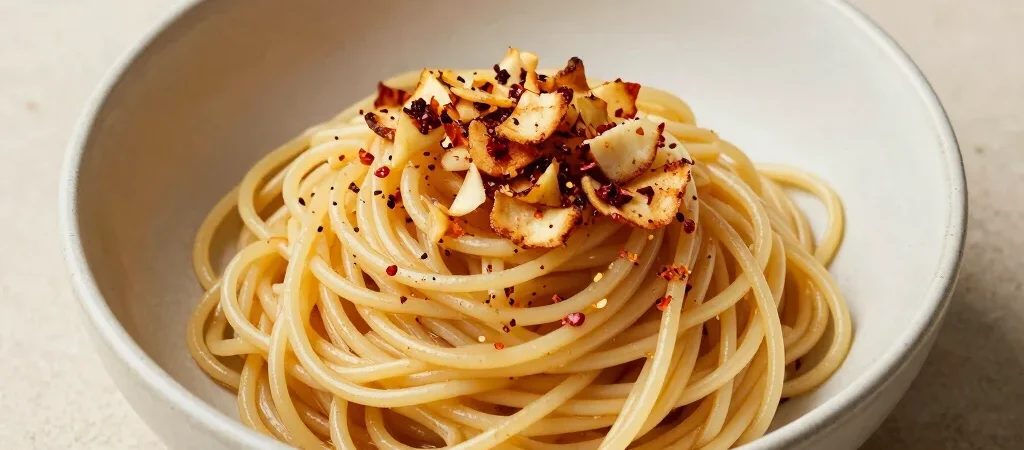
Aglio e olio is garlic and oil. That’s the whole recipe. It uses ingredients almost everyone has, takes about as long as boiling the pasta, and depends entirely on technique. If you do it well, the oil and pasta water come together into a light, glossy sauce. If you don’t, it ends up oily or tastes burnt.
Here’s how to get it right.
Jump to recipeRead the history
About this dish
Glossy, garlicky spaghetti with a gentle heat from chili and a scatter of fresh parsley. It’s a very simple dish, so the quality of the olive oil and the care you take with the garlic really show.
Make it when the fridge is nearly empty. It’s also a good base for adding shrimp, anchovies or vegetables.
Prep 5 min · Cook 15 min · Serves 4
Ingredients
- 12 oz (340 g) spaghetti
- Kosher salt, about 2 tbsp for 4 quarts (4 L) of water
- 1/3 cup (80 ml) good extra-virgin olive oil, plus more to finish
- 6 garlic cloves, thinly sliced
- 1/2 tsp red pepper flakes, or to taste
- 1/4 cup chopped flat-leaf parsley
- Freshly ground black pepper
- Optional: lemon zest, grated Parmesan or toasted breadcrumbs
Method
- Bring a large pot of generously salted water to a boil. Cook the spaghetti for 1 minute less than the package says. Before draining, scoop out 1 1/2 cups of the pasta water.
- While the pasta cooks, put the olive oil and sliced garlic in a large, wide skillet. Warm over medium-low heat. Let the garlic sizzle gently for 3 to 4 minutes, stirring, until pale gold and fragrant. It should not brown, since browned garlic turns bitter.
- Add the pepper flakes and cook for 30 seconds.
- Carefully pour in 1/2 cup of the pasta water. It will bubble and spit. Bring it to a simmer.
- Add the drained pasta to the pan. Turn the heat to medium-high and toss or stir vigorously for 1 to 2 minutes, adding more pasta water a splash at a time, until the sauce turns creamy and clings to the strands.
- Take the pan off the heat. Toss in the parsley and a good drizzle of fresh olive oil. Season with pepper and serve at once.
Tips
- Slice the garlic with a sharp knife. Thin slices cook evenly, while minced garlic burns quickly.
- Start the garlic in cool oil and warm it up slowly. It infuses the oil without scorching.
- The pasta water is the sauce. It contains starch, which binds with the oil to make it creamy. Don’t throw it away.
- Serve it right away. This dish doesn’t wait.
Storage
Aglio e olio is best fresh. Leftovers keep for 2 days in the fridge. Reheat in a skillet with a splash of water to bring the sauce back.
Variations
- Melt 3 or 4 anchovy fillets into the oil with the garlic for a deeper, savory flavor.
- Finish with lemon zest and toasted breadcrumbs for crunch.
- Add shrimp or sautéed broccoli rabe to turn it into a fuller meal.
Where it comes from
Spaghetti aglio, olio e peperoncino is associated with Naples and Rome, and is the kind of dish an Italian household makes with what’s left in the cupboard. It has a reputation as a midnight dish, something cooked late at night when there’s nothing else around, and some Italians call these late spaghetti suppers spaghettate.
In some Neapolitan families, it’s also eaten on Christmas Eve, as a first course before the fish dishes that traditionally make up the meal. Its simplicity is the point. With only a few ingredients, quality counts, so use good olive oil and fresh garlic and pay attention to the heat.
The pasta water technique used here is the same principle behind carbonara and cacio e pepe. Starchy cooking water helps fat and liquid bind into a smooth sauce, which is why Italian cooks save it every time.