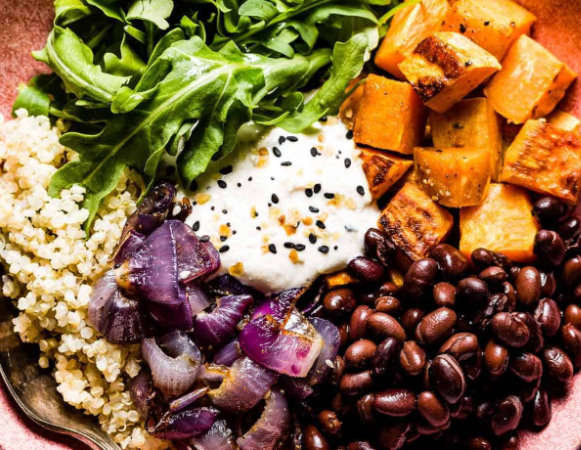
A good grain bowl is about contrast: something soft, something crisp, something fresh and something creamy. This one has fluffy quinoa, caramelized sweet potato, crunchy roasted chickpeas, tender spinach and avocado, held together by a lemony tahini dressing.
Everything except the avocado and dressing can be made ahead, which makes it a good meal-prep recipe.
Jump to recipeRead the history
About this dish
A bowl built on contrast: sweet roasted sweet potato, crispy chickpeas, soft quinoa, fresh spinach and creamy avocado, all tied together by a lemony tahini sauce.
It’s vegetarian and, without the optional feta, naturally dairy-free. It’s also easy to adapt to whatever vegetables you have.
Prep 15 min · Cook 35 min · Serves 4
Ingredients
Bowl
- 1 cup (185 g) dry quinoa
- 1 large sweet potato (about 1 lb / 450 g), cut into 3/4-inch cubes
- 1 can (15 oz / 400 g) chickpeas, drained, rinsed and patted very dry
- 2 cups broccoli florets, optional
- 3 tbsp olive oil
- 1 tsp smoked paprika
- 1 tsp ground cumin
- 1/2 tsp garlic powder
- 3/4 tsp salt
- 4 cups (120 g) baby spinach
- 1 ripe avocado, sliced
- 1 tbsp sesame seeds
Lemon tahini dressing
- 3 tbsp tahini
- 3 tbsp lemon juice
- 2 to 4 tbsp warm water, to thin
- 1 small garlic clove, grated
- 1/2 tsp salt
- 1 tsp maple syrup, optional
Method
- Heat the oven to 425°F (220°C). Put two rimmed baking sheets in the oven to preheat.
- Toss the sweet potato with 1.5 tbsp of the oil, half the paprika, cumin, garlic powder and salt. Toss the chickpeas with the remaining oil and spices.
- Spread them on separate sheets in a single layer. Don’t crowd the pans. Roast for 25 to 30 minutes, turning once, until the sweet potato is tender with browned edges and the chickpeas are crisp. Add the broccoli to the sweet potato tray for the last 15 minutes if using.
- Meanwhile, rinse the quinoa, then cook it with 1 3/4 cups water and a pinch of salt. Cover and simmer for 15 minutes, then rest for 5 minutes and fluff.
- Whisk the tahini, lemon juice, garlic and salt. It will thicken at first. Add warm water a spoonful at a time until it’s pourable.
- Divide the spinach and quinoa between four bowls. Top with the sweet potato, chickpeas, broccoli and avocado. Drizzle with dressing and finish with sesame seeds.
Tips
- Dry the chickpeas well. Any moisture left on them steams instead of crisping.
- Give the vegetables space. Overcrowding is why roasted vegetables turn soft.
- If the dressing seizes when you add the lemon, keep whisking and add water. It comes back together.
- Warm quinoa wilts the spinach slightly, which is nice. Cold quinoa keeps it crisp.
Meal prep and storage
Store the quinoa, roasted vegetables and dressing in separate containers for up to 4 days. Cut the avocado fresh. The chickpeas will soften in the fridge, so crisp them in a hot oven or pan for a few minutes before serving.
Variations
- Swap sweet potato for roasted cauliflower, beets or butternut squash.
- Add crumbled feta or a soft-boiled egg for extra protein.
- Use kale instead of spinach, and massage it with a little lemon juice first.
Where the Buddha bowl comes from
The bowl meal is a very old format: rice with toppings, noodles with broth, grains with vegetables and legumes. The specific name Buddha bowl is relatively new, and its origin isn’t settled. One explanation links it to the image of a monk’s alms bowl being filled with whatever offerings came. Another says it refers to a bowl piled so high it bulges like a round belly.
What is clear is that the term took off in the 2010s through food blogs and social media, to describe a plant-forward bowl of grains, vegetables, protein and a sauce. It has become shorthand for a meal that’s balanced and easy to assemble, which is what this recipe is.
Chickpeas are among the earliest cultivated legumes, with archaeological evidence from the Middle East that goes back thousands of years. They are the base of hummus, falafel and many other dishes, which is why a bowl like this one has such deep roots even though the name is new.