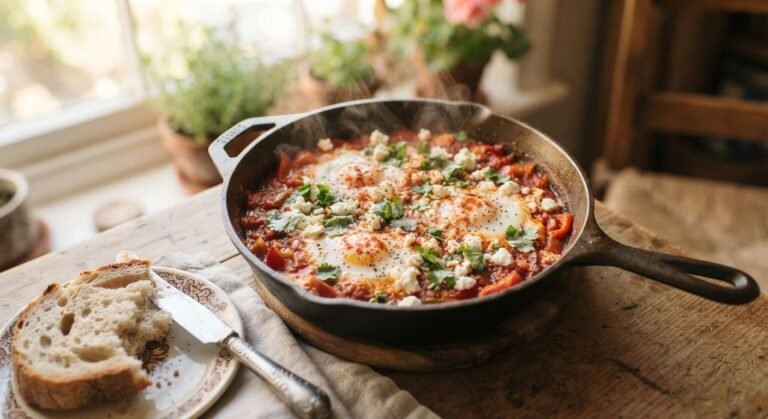

Shakshuka is eggs cooked directly in a pan of spiced tomato and pepper sauce. That’s the whole idea. It takes one skillet, about half an hour, and ingredients most kitchens already have.
This version leans on cumin, paprika and a little harissa for heat. The feta goes on at the end instead of into the sauce, so it stays creamy and doesn’t melt away. Serve it with something to scoop: warm pita, a crusty loaf, or flatbread.
Jump to recipeRead the history
About this dish
A good shakshuka sits somewhere between a stew and a sauce: sweet from slowly cooked peppers, a little smoky from cumin and paprika, and bright with tomato. The whites set while the yolks stay loose, so every piece of bread you drag through the pan picks up sauce, egg and a little salty feta.
The heat is up to you. Harissa or chili flakes make it properly spicy, and leaving them out gives you something mild enough for kids. Serve it straight from the skillet so it stays hot at the table.
Prep 10 min · Cook 25 min · Serves 4
Ingredients
- 3 tbsp olive oil
- 1 large yellow onion, finely diced
- 1 red bell pepper, diced
- 4 garlic cloves, minced
- 1 tsp ground cumin
- 1 tsp sweet or smoked paprika
- 1/2 tsp ground coriander
- 1/4 tsp chili flakes, or 1 tbsp harissa paste
- 1 tbsp tomato paste
- 1 can (28 oz / 800 g) whole peeled tomatoes, crushed by hand
- 1/2 tsp sugar, only if the tomatoes taste sharp
- Salt and black pepper
- 6 large eggs
- 100 g (3.5 oz) feta, crumbled
- Chopped parsley or cilantro, to finish
- Pita or crusty bread, to serve
Method
- Warm the olive oil in a deep 12-inch skillet over medium heat. Add the onion and pepper with a pinch of salt and cook for 8 to 10 minutes, until soft and just starting to color.
- Stir in the garlic, cumin, paprika, coriander and chili. Cook for 1 minute until fragrant, then add the tomato paste and cook for another minute.
- Pour in the crushed tomatoes. Season with salt and pepper and add the sugar if needed. Simmer over medium-low heat for 10 to 12 minutes, stirring now and then, until the sauce is thick enough that a spoon leaves a clear trail.
- Taste and adjust. The sauce should be properly seasoned, because the eggs add no flavor of their own.
- Use the back of a spoon to make six shallow wells in the sauce. Crack an egg into each one.
- Cover the pan and cook on low for 5 to 8 minutes. Five minutes gives you runny yolks and just-set whites. Eight gives you firmer yolks.
- Scatter the feta and herbs over the top and serve straight from the pan.
Tips for a better shakshuka
- Reduce the sauce before the eggs go in. A thin sauce lets the whites spread and the eggs sink.
- Use a lid that actually fits. The steam sets the tops of the whites. Without it the bottoms overcook first.
- Crack each egg into a small cup first, then tip it into its well. It’s much easier to keep the yolks whole.
- Take the eggs out of the fridge 15 minutes before cooking so they cook evenly.
Storage and reheating
The sauce keeps for 4 days in the fridge and freezes well for up to 3 months. Cook a double batch and freeze half, then add fresh eggs when you reheat it. Don’t reheat the eggs themselves. They turn rubbery.
Variations
- Green shakshuka: swap the tomatoes for sautéed zucchini, spinach and herbs, and cook the eggs the same way.
- Add a can of drained chickpeas to the sauce for a heartier dinner.
- Brown a few merguez or spicy sausages first and cook the sauce in the same pan.
Where shakshuka comes from
Shakshuka is usually traced to North Africa, especially Tunisia, Libya and Algeria, where eggs poached in a spiced sauce of peppers and tomatoes have long been an everyday meal. The name is generally said to come from a Maghrebi Arabic word meaning a mixture, which suits a dish that is really just everything in one pan.
Tomatoes only reached the Mediterranean after the 1500s, so the red version is younger than many people assume. Earlier versions of this kind of dish would have relied on peppers, onions and spices alone. In the 20th century, Jewish families moving from Tunisia, Libya and Morocco brought shakshuka to Israel, where it became a standard breakfast and café dish. Today you’ll find local versions across the Middle East, made with merguez, chard, cheese or preserved lemon.
The name changes from country to country, and you will see it written shakshouka or chakchouka as well. The idea behind it is widespread. Turkish menemen, Mexican huevos rancheros and Italian eggs in purgatory all cook eggs in a spiced tomato sauce, which says something about how well the combination works.