Good meatballs are tender, well seasoned and not too dense. Most of that comes down to two things: a soaked breadcrumb mixture, and not overworking the meat. Get those right and the rest is easy.
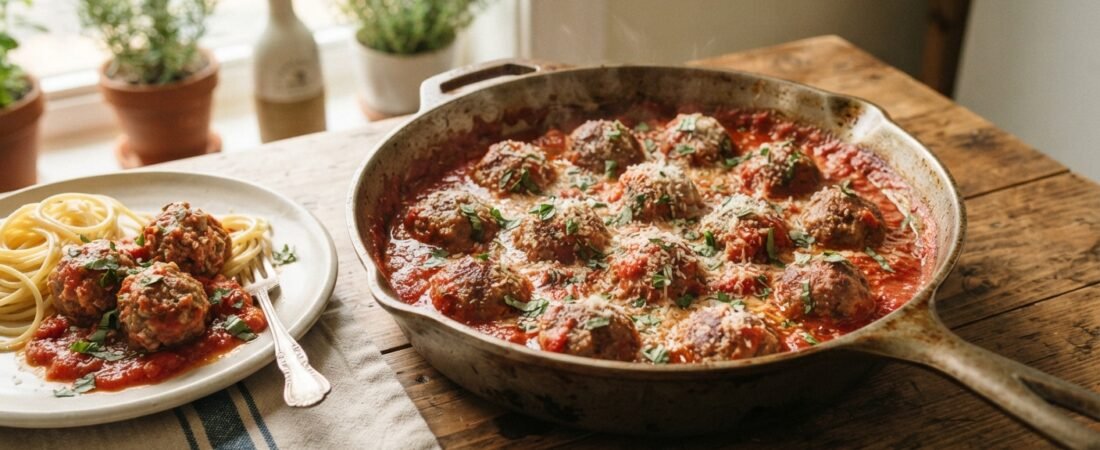
These are browned in a skillet, finished in the sauce, and topped with mozzarella under the broiler. Serve them over spaghetti, in a toasted roll, or straight from the pan with bread.
Jump to recipeRead the history
About this dish
These are the soft, savory meatballs you want over spaghetti or piled into a toasted roll: seasoned with garlic, Parmesan and parsley, browned for flavor, then finished in a bright tomato sauce. The mozzarella melts into a golden cap that makes the whole pan feel special, even on a Tuesday.
They reheat well, freeze well and scale up easily, which makes them a good choice for feeding a crowd or stocking the freezer.
Prep 25 min · Cook 35 min · Serves 4 to 6 (about 18 meatballs)
Ingredients
Meatballs
- 1 lb (450 g) ground beef, 80/20
- 1/2 lb (225 g) ground pork
- 1/2 cup (30 g) fresh breadcrumbs, or 1/3 cup panko
- 1/3 cup (80 ml) whole milk
- 1 large egg
- 1/3 cup (35 g) finely grated Parmesan
- 3 garlic cloves, minced
- 2 tbsp chopped fresh parsley
- 1 tsp salt
- 1/2 tsp black pepper
- 1/2 tsp dried oregano
- 2 tbsp olive oil, for browning
Sauce and topping
- 2 tbsp olive oil
- 1 small onion, finely diced
- 3 garlic cloves, sliced
- 1 can (28 oz / 800 g) crushed tomatoes
- 1 tsp dried oregano
- 1/2 tsp salt, plus more to taste
- 1/2 tsp sugar
- A handful of fresh basil
- 6 oz (170 g) low-moisture mozzarella, shredded
Method
- Stir the breadcrumbs and milk together in a large bowl and leave for 5 minutes until they form a soft paste. This is what keeps the meatballs tender.
- Add the beef, pork, egg, Parmesan, garlic, parsley, salt, pepper and oregano. Mix with your hands just until combined. Stop as soon as there are no streaks of dry crumb.
- With damp hands, roll into balls about 1.5 inches (4 cm) wide. You should get around 18.
- Heat 2 tbsp olive oil in a large ovenproof skillet over medium-high heat. Brown the meatballs in two batches, about 2 to 3 minutes per side. They don’t need to cook through. Move them to a plate.
- Lower the heat to medium. In the same pan, cook the onion for 4 minutes, then add the sliced garlic for 1 minute. Pour in the tomatoes, add the oregano, salt and sugar, and bring to a simmer.
- Nestle the meatballs back into the sauce. Cover and simmer gently for 15 minutes, turning them once, until they reach 160°F (71°C) in the center.
- Heat the broiler. Scatter the mozzarella over the top and broil for 3 to 4 minutes, until bubbling and spotted brown. Tear the basil over the pan and serve.
Tips
- Don’t skip the pork. It adds fat and softness that beef alone doesn’t give you.
- Keep the mixture light. Compressing the meat as you roll makes the meatballs tough.
- Use low-moisture mozzarella, the firm kind, not fresh. Fresh mozzarella releases water and makes the sauce thin.
- No ovenproof skillet? Bake the finished pan in a 425°F oven for 8 minutes, or move everything to a baking dish before the cheese goes on.
Storage and freezing
Leftovers keep for 4 days in the fridge. Cooked meatballs freeze well in their sauce for up to 3 months. Thaw overnight in the fridge and warm gently on the stove.
Variations
- Swap the beef and pork for ground turkey or chicken, and add an extra spoonful of olive oil to the mix.
- Make meatball subs: pile them into a toasted roll with sauce and cheese and broil again.
- Skip the mozzarella and serve with a spoonful of ricotta on top.
Spaghetti and meatballs is an Italian-American dish
In Italy, meatballs (polpette) are normally small, often eaten on their own or in soup, and not served on top of spaghetti. The pairing most of us picture grew up in the United States. Italian immigrants arriving in the late 19th and early 20th centuries found meat much cheaper and more plentiful than at home, so meatballs got bigger, and putting them on pasta turned a side dish into a full meal.
By the early 20th century, spaghetti and meatballs was a fixture in Italian-American restaurants, and it spread from there into home cooking and cookbooks across the country. It’s a good example of a dish that was reshaped by where people ended up, and it’s no less authentic for it.
Meatballs are not unique to Italy or America. Almost every cuisine has a version, from Swedish köttbullar and Spanish albóndigas to Middle Eastern kofta. The idea is simple and universal: chop or grind meat, add bread or grain and seasoning, and shape it into something that cooks quickly and stretches a small amount of meat.