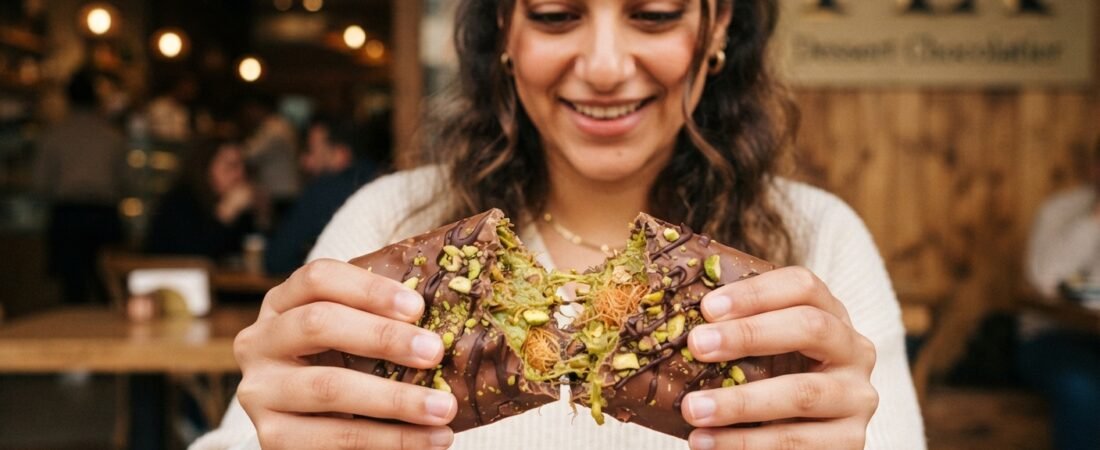
Dubai chocolate is a thick chocolate bar filled with pistachio cream and crispy shredded pastry. When you snap it open you get a bright green center and a loud crunch. That contrast is most of the appeal, and it’s why the bar spread so fast online.
You can make a good version at home. The key is the filling: toasting the pastry properly so it stays crisp, and using real pistachio spread, not a sweet, mostly-sugar one.
Jump to recipeRead the history
About this treat
A thick chocolate shell, a crunchy layer of toasted pastry, and a rich, slightly salty pistachio cream. It tastes like a candy bar made by a pastry chef: the crunch comes from kataifi, and the creaminess comes from pistachio and tahini.
A little goes a long way. Break it into pieces and share it, or wrap a few as gifts.
Prep 30 min · Chill 45 min · Makes 1 large bar or about 6 small ones
Note: contains nuts (pistachio), sesame (tahini), gluten (kataifi pastry) and dairy. Check labels if anyone has allergies.
Ingredients
Filling
- 4 oz (115 g) kataifi (shredded phyllo), thawed if frozen
- 1 tbsp butter or ghee
- 1/2 cup (130 g) pistachio spread or paste
- 1 tbsp tahini
- Pinch of salt
Chocolate shell
- 10 oz (280 g) good-quality milk or dark chocolate, chopped
- A silicone chocolate bar mold, or a small loaf pan lined with parchment
Method
- Cut the kataifi into small pieces with scissors, about 1/2 inch long. Melt the butter in a wide skillet over medium heat and cook the pastry for 6 to 8 minutes, stirring, until deep golden and crisp. Let it cool completely on a plate.
- Stir together the pistachio spread, tahini and salt, then fold in the cooled kataifi. It should be a thick, crunchy paste.
- Melt the chocolate gently, in short bursts in the microwave or over a pan of barely simmering water, stirring until smooth. Don’t let it get above about 115°F (46°C).
- Spoon a thin layer of chocolate into the mold and brush it up the sides. Chill for 10 minutes until set.
- Press the pistachio filling into the shell in an even layer, leaving a little space at the top.
- Cover with the remaining melted chocolate and smooth it level. Tap the mold to remove air bubbles.
- Refrigerate for 30 minutes until fully set, then carefully unmold.
Tips
- Toast the pastry until it’s properly golden. Pale kataifi turns soft and chewy once it’s mixed with the filling.
- Use a chocolate you’d eat on its own. There’s nowhere to hide an average one.
- For a glossy snap, the chocolate should be tempered. If you don’t temper it, it will still taste good but may be duller and softer. Keep the finished bar in the fridge.
- Don’t overfill. A thin, even filling is easier to bite through than a thick one.
Storage
Keep in an airtight container in the fridge for up to 2 weeks. The pastry gradually softens, so it’s at its crunchiest in the first few days.
Variations
- Use white chocolate for a sweeter, milder bar.
- Add a pinch of ground cardamom or a teaspoon of orange blossom water to the filling.
- Press chopped pistachios into the base of the mold before pouring the filling for an extra layer of crunch.
Where it came from
The bar is generally credited to Fix Dessert Chocolatier, a small company in Dubai founded by Sarah Hamouda. Its original bar, sold under the name Can’t Get Knafeh of It, combined the flavors of knafeh, a classic Middle Eastern dessert, with milk chocolate. It was created around 2021 and stayed a local favorite until videos of people biting into it began circulating on TikTok in late 2023.
Knafeh itself is a much older dessert from the Levant, usually made with shredded pastry or semolina, melted cheese and sweet syrup, and associated with cities such as Nablus. Kataifi is the shredded pastry used for the crunchy filling. After the bar went viral, demand for pistachios rose sharply, and shortages and higher prices were widely reported. Dozens of imitations and home versions followed.
Because the trend grew so quickly, many bars sold as Dubai chocolate are now made elsewhere and use different fillings. The name has come to describe a style more than a place. Pistachio desserts themselves are very old, and are central to the sweets of the Levant and Turkey.