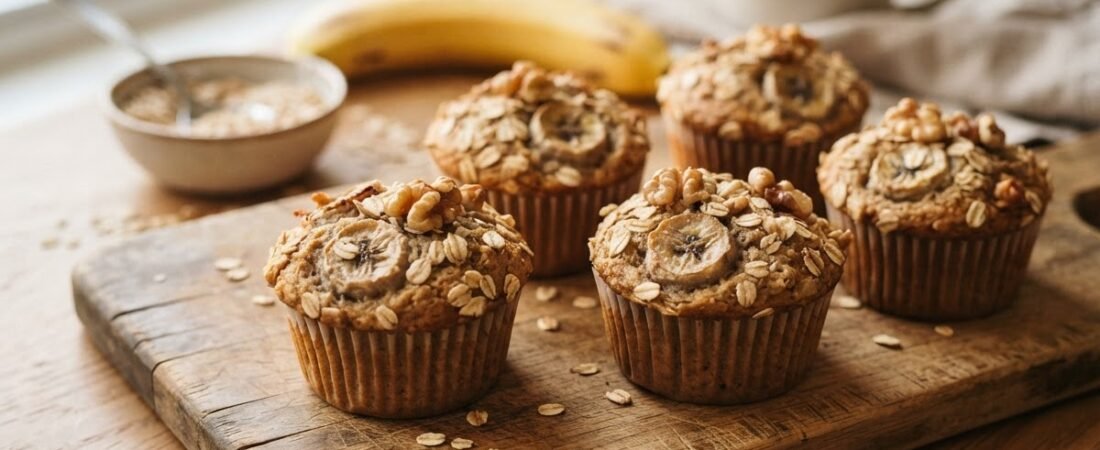
These muffins are made with oats, whole wheat flour and ripe bananas, and sweetened mostly with maple syrup. They come out soft and moist, taste like banana bread, and need only one bowl and a whisk.
The riper the bananas, the better. Peel and freeze any that are going brown, and thaw them when you’re ready to bake.
Jump to recipeRead the history
About this dish
Soft, tender and naturally sweet, with the warm flavor of banana bread and a slightly chewy texture from the oats. They aren’t too sweet, so they work for breakfast as well as a snack.
They freeze well and pack easily, which makes them a good choice for busy mornings.
Prep 10 min · Bake 18 to 20 min · Makes 12 muffins
Ingredients
- 2 medium very ripe bananas, mashed (about 1 cup)
- 2 large eggs, at room temperature
- 1/3 cup (80 ml) pure maple syrup or honey
- 1/3 cup (80 ml) milk of your choice
- 1/4 cup (60 ml) melted coconut oil or olive oil
- 1 tsp vanilla extract
- 1 1/2 cups (135 g) rolled oats
- 1 cup (120 g) whole wheat flour
- 1 tsp baking powder
- 1/2 tsp baking soda
- 1 tsp ground cinnamon
- 1/4 tsp salt
- 1/2 cup chocolate chips, chopped walnuts or blueberries, optional
Method
- Heat the oven to 350°F (175°C). Line a 12-cup muffin tin with paper liners or grease it well.
- In a large bowl, whisk the mashed bananas, eggs, maple syrup, milk, oil and vanilla until combined.
- Add the oats, flour, baking powder, baking soda, cinnamon and salt. Stir gently until just combined. A few small lumps are fine.
- Fold in any mix-ins. Let the batter rest for 10 minutes. The oats absorb some of the liquid and the muffins come out more tender.
- Divide the batter evenly among the cups, filling each about three-quarters full. Press a few extra oats or chocolate chips on top if you like.
- Bake for 18 to 20 minutes, until golden and a toothpick comes out clean.
- Cool in the pan for 5 minutes, then move to a rack.
Tips
- Use bananas with plenty of brown spots. Green-tinged ones are starchy and not sweet enough.
- Don’t overmix. Stirring too much makes the muffins tough.
- Weigh the flour or spoon it into the cup and level it. Packing it makes the muffins dry.
- To get higher domed tops, start the oven at 400°F for the first 5 minutes, then drop to 350°F.
Storage
Keep in an airtight container at room temperature for 2 days, or in the fridge for 5. To freeze, wrap individually and freeze for up to 3 months. Thaw overnight or microwave for 30 seconds.
Variations
- Swap the whole wheat flour for a 1:1 gluten-free baking blend. Use certified gluten-free oats.
- Replace the milk with plain yogurt for a tangier, even moister crumb.
- Add a spoonful of peanut butter to the batter, or swirl it on top before baking.
A bit of muffin and banana history
The muffin as Americans know it is a quick bread, leavened with baking soda or baking powder instead of yeast. The older English muffin is a different thing, made from a yeasted dough and cooked on a griddle. Chemical leaveners came into wide use in the 19th century, which made it possible to bake light, tender cakes and muffins without waiting for dough to rise.
Bananas became a common fruit in the United States after the late 19th century, when refrigerated shipping made imports from Central America practical. Banana bread recipes started appearing in American cookbooks in the 1930s, and it’s often suggested that the Depression helped, because bakers did not want to throw away overripe fruit. Banana muffins are the portable version of that idea.
The word muffin appears in English print in the early 18th century, but it first referred to yeast-raised breads. The quick, cake-like muffin Americans know today developed in the 19th century once chemical leaveners became widely available.