New England clam chowder is a simple soup: clams, potatoes, onion, salt pork and cream, in a thick, creamy base. It’s not complicated, but there are a few points where it goes wrong. Boiling the dairy, overcooking the clams and under-seasoning are the usual ones.
This version uses canned clams, which are perfectly good here and keep the recipe practical. A fresh-clam variation is at the bottom.
Jump to recipeRead the history
About this dish
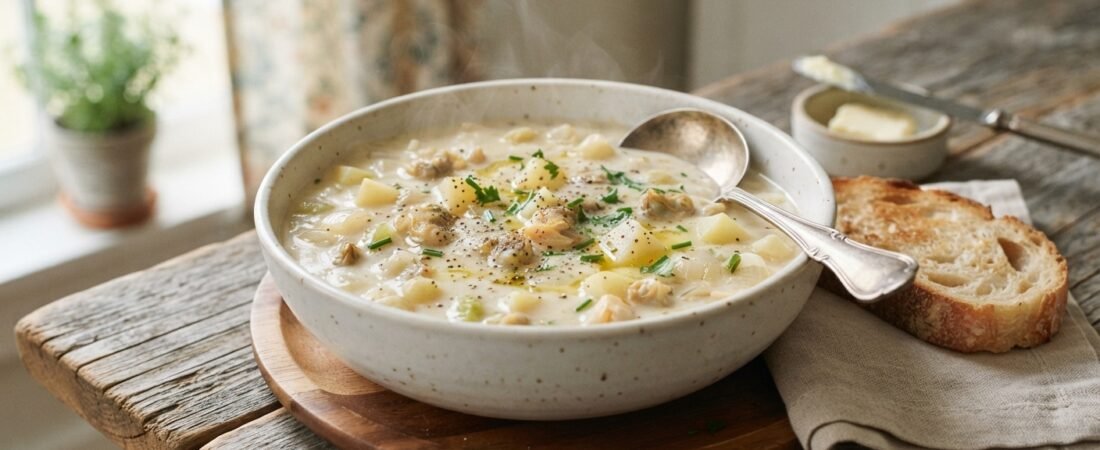
A proper New England chowder is thick but not gluey, creamy but not heavy, with tender potatoes, sweet clams and small crisp pieces of salt pork for salt and smoke. The broth should taste of the sea first and cream second.
Serve it in warm bowls with oyster crackers or crusty bread. On a cold evening it’s a one-pot meal.
Prep 15 min · Cook 40 min · Serves 6
Ingredients
- 4 oz (115 g) salt pork or thick-cut bacon, finely diced
- 2 tbsp unsalted butter
- 1 large yellow onion, diced
- 2 celery ribs, diced
- 2 garlic cloves, minced (optional)
- 1/4 cup (30 g) all-purpose flour
- 3 cans (6.5 oz / 185 g each) chopped clams, drained, juice reserved
- Bottled clam juice, as needed to make 3 cups (720 ml) of liquid in total with the reserved juice
- 1 1/2 lb (680 g) Yukon Gold potatoes, cut into 1/2-inch cubes
- 2 bay leaves
- 1 tsp fresh thyme leaves
- 2 cups (480 ml) whole milk
- 1 cup (240 ml) heavy cream
- Salt and white or black pepper
- Oyster crackers and chopped chives, to serve
Method
- Cook the salt pork in a large heavy pot over medium heat for 6 to 8 minutes, until the fat has rendered and the pieces are crisp. Lift the pieces out with a slotted spoon and set them aside for the topping.
- Add the butter, onion and celery to the fat. Cook for 6 to 8 minutes until soft but not brown. Add the garlic for the last minute.
- Sprinkle the flour over the vegetables and stir for 2 minutes to cook out the raw taste.
- Slowly pour in the clam liquid, whisking all the time so the flour doesn’t clump. Add the potatoes, bay leaves and thyme. Bring to a simmer and cook for 12 to 15 minutes, until the potatoes are just tender.
- Stir in the milk and cream. Heat gently until steaming. Don’t let it boil, or the dairy can split.
- Add the drained clams and warm for 3 to 5 minutes. They are already cooked, and longer than that makes them rubbery.
- Taste and season well with salt and pepper. Remove the bay leaves. Serve topped with the crisp pork, chives and oyster crackers.
Tips
- To thicken further, mash a handful of the potatoes against the side of the pot.
- Season at the end. Salt pork and canned clams vary a lot in saltiness.
- Chowder tastes better the next day. If you can, make it ahead and reheat gently.
- Yukon Golds hold their shape and give a creamy texture. Russets break down and make the soup grainier.
Storage
Keeps for 3 days in the fridge. Reheat over low heat and stir often. Chowder doesn’t freeze well because the potatoes and cream turn grainy.
With fresh clams
Steam 3 lb of littleneck or cherrystone clams in 1 cup of water, covered, for 6 to 8 minutes until they open. Strain the liquid through a fine sieve or coffee filter and use it in place of the canned juice. Chop the clam meat and add at the end, as in the main recipe.
Where chowder comes from
The word chowder is generally thought to come from the French chaudière, a large cooking pot, probably brought to North America by French and Breton fishermen. Early chowders were fishermen’s food, layering fish or shellfish with salt pork and ship’s biscuit in a pot over the fire.
Over time regional styles developed. New England chowder is cream or milk based. Manhattan chowder is made with tomatoes, and Rhode Island has a clear-broth version. The rivalry between them has produced some famous jokes. In 1939 a Maine lawmaker introduced a bill, as a joke, to ban tomatoes in clam chowder. The dairy-based style remains the one most people think of first.
Chowder is not only about clams. Fish chowder made with haddock or cod, and corn chowder, are both traditional, and in New England you will find all three on many menus. The clam version is the one that became a symbol of the region.