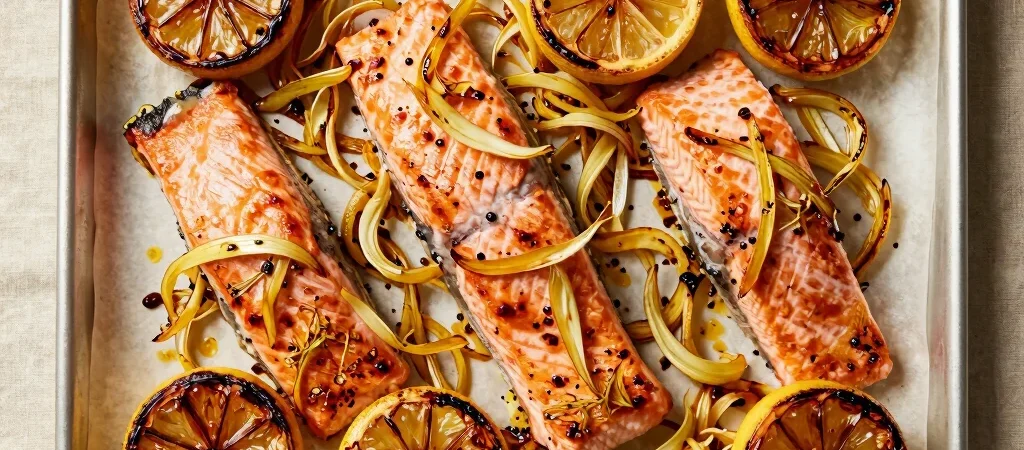
Sheet pan dinners go wrong when everything goes in at once. Salmon cooks in about 10 minutes. Fennel takes more like 20. The fix is simple: start the fennel first and add the fish later, so both finish together.
Roasted citrus slices bring sweetness and a little bitterness that suits rich salmon. Fennel turns soft and sweet in the oven, with just a trace of aniseed.
Jump to recipeRead the history
About this dish
Tender, flaky salmon over sweet, soft fennel, with roasted lemon and orange adding bright, slightly bitter notes. Everything cooks on one tray, so cleanup is minimal.
Serve it with rice, couscous or crusty bread to soak up the juices.
Prep 15 min · Cook 25 min · Serves 4
Ingredients
- 1 large fennel bulb, trimmed, cored and cut into 1/4-inch slices, fronds saved
- 3 tbsp olive oil, divided
- 1 tsp kosher salt, divided, plus flaky salt to finish
- Black pepper
- 1 small red onion, cut into thin wedges, optional
- 2 garlic cloves, thinly sliced
- 4 salmon fillets (about 6 oz / 170 g each), skin-on, patted dry
- 1 lemon, sliced into thin rounds
- 1 orange, sliced into thin rounds
- 1 tbsp capers, optional
Method
- Heat the oven to 425°F (220°C). Line a large rimmed baking sheet with parchment.
- Toss the fennel, onion and garlic with 2 tbsp olive oil, 1/2 tsp of the salt and some pepper. Spread them in a single layer on the pan.
- Roast for 12 minutes, until the fennel is starting to soften at the edges.
- While it roasts, rub the salmon with the remaining 1 tbsp oil, 1/2 tsp salt and pepper.
- Take the pan out of the oven. Push the vegetables aside a little and set the salmon fillets on the pan, skin-side down. Lay the lemon and orange slices over and around the fish and scatter on the capers.
- Roast for 10 to 12 minutes, until the salmon is just opaque and flakes with a fork. For medium, the center should read about 125 to 130°F (52 to 54°C). The USDA recommends 145°F (63°C) for fully cooked fish.
- Finish with fennel fronds, flaky salt and a squeeze of the roasted orange.
Tips
- Slice the fennel thinly and evenly. Thick pieces stay raw in the middle.
- Pat the salmon dry. Surface moisture prevents it from roasting properly.
- Thickness matters more than weight. A thin tail piece will cook in 7 to 8 minutes, so tuck a folded end under it, or pull it out early.
- Parchment makes cleanup easy and stops the citrus sticking.
Storage
Leftover salmon keeps for 2 days in the fridge. It’s good cold, flaked over a salad or grain bowl. Reheat gently at low power, or eat it cold, as fish dries out when reheated.
Variations
- Swap the salmon for trout, cod or halibut. Thinner fillets need less time.
- Add baby potatoes, halved and parboiled for 8 minutes, to the first stage of roasting.
- Use asparagus or sliced zucchini in place of fennel, and add them with the fish.
About the ingredients
Fennel is a Mediterranean plant that people have used for thousands of years. The Greek word for it, marathon, is the origin of the name of the town of Marathon, which is said to have been surrounded by fennel fields. Pairing it with fish and citrus is a classic combination in southern Italy and Greece.
Meyer lemons, which work well here if you can find them, are a cross between a lemon and a mandarin or orange. They were introduced to the United States in 1908 by Frank Meyer, a plant explorer for the US Department of Agriculture, and have a sweeter, more floral flavor. The sheet pan dinner itself became especially popular in the 2010s, helped by cookbooks and food websites that promoted whole meals cooked on one tray.
Salmon has been a staple for peoples across the Pacific Northwest for thousands of years. Many Indigenous communities developed traditions of smoking and cooking it over fire, including on cedar planks, which are still widely used today.